Lyrical-Documentation / documentación lírica
Methodology & Core Philosophy / Metodología y filosofía central
Ancestral Cognition: The Landscape as Archive
My work is an investigation into the Social Ecology of the Periphery — a lyrical-documentary practice situated at the intersection of Society and Geographic Extremity. I believe that landscape is not merely a backdrop but the primary architect of the social contract. By documenting the "Periphery" through a poetic lens - those threshold spaces where human communities exist under intense environmental and systemic pressure - I examine the liminality of survival through a multimodal lens.
The Aesthetic of Slow Violence
Utilizing a minimalist, typology-led aesthetic, I document the "slow violence" of environmental and systemic shifts through a poetic lens. This is a commitment to the longitudinal study: staying with a place long enough to hear its acoustic signature and see the subtle retreat of its glaciers. My methodology integrates high-fidelity photography with acoustic ecology and ethnographic prose, creating a sensory archive that is as much an act of witness as it is a formal investigation.
Subconscious Terrains: A Dignity-First Inquiry
My work explores the intersections of social marginality, deep time, and sensory heritage. Utilizing photography as a tool for mapping spatial cognition, I seek to visualize the subconscious terrain formed at the intersection of geographic isolation and collective memory. As a researcher, I navigate extreme geographic margins with a "Dignity-First" methodology—ensuring that the visual narrative serves the community as a tool for advocacy and the preservation of cultural memory. Thus, at the heart of my practice is a commitment to Digital Sovereignty and the ethics of representation.
Longitudinal Commitment
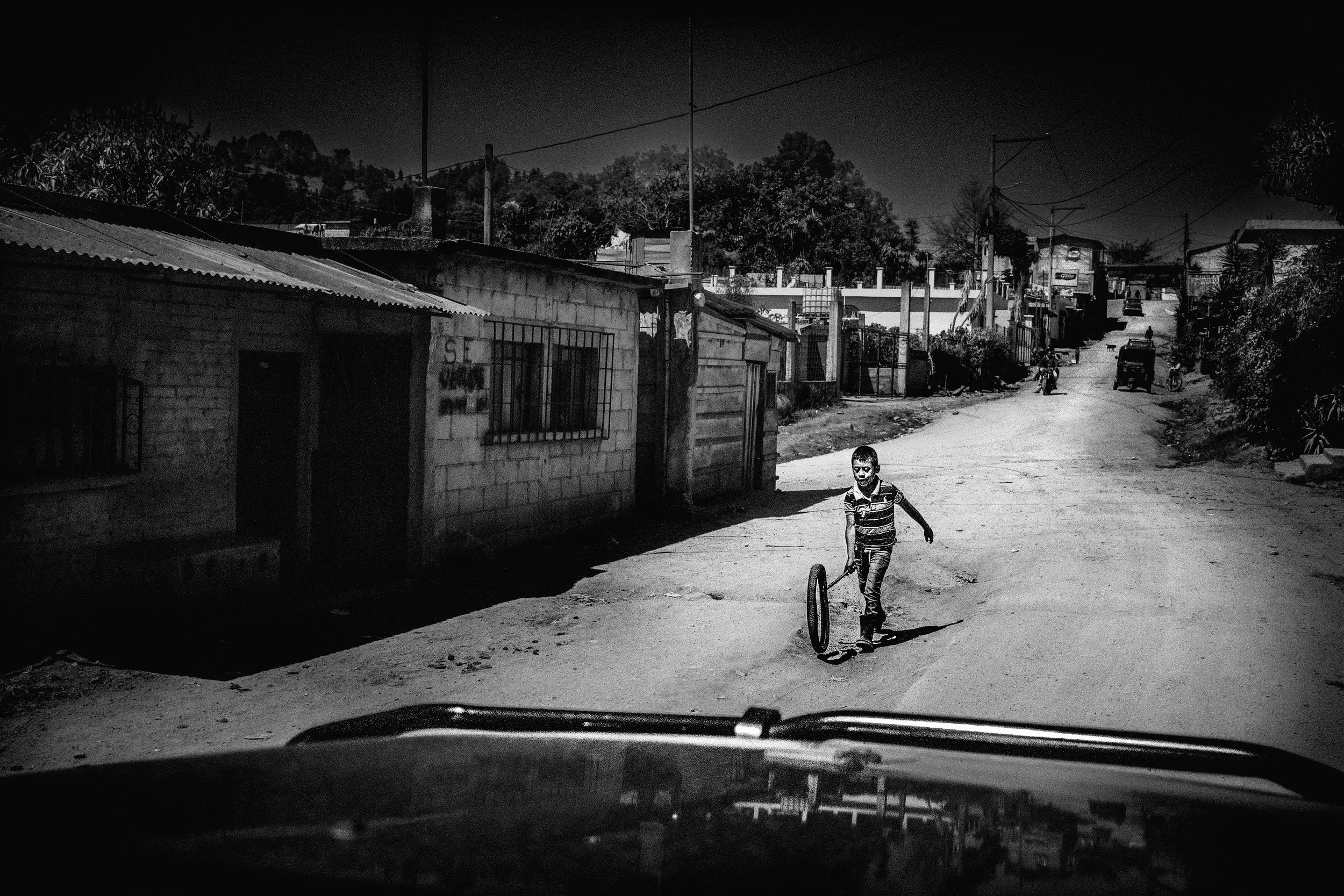
Authentic documentation requires deep-time engagement. My practice is defined by multi-year projects - such as a seven-year documentation of the causes of migration in Guatemala - that allow for the observation of slow-moving environmental and cultural shifts. This longitudinal approach builds the trust necessary to document sensitive narratives with ethical safeguarding.
Applied Research & Humanitarian Collaboration
Strategic visual documentation for impact assessment in high-risk zones, focusing on the intersection of geography, social marginality, and resource accessibility.
Beyond conceptual inquiry, my methodology is designed to support international NGOs and humanitarian missions. By documenting the Social Ecology of a region, I provide organizations with deep visual insights into community resilience, migration patterns, and the human-geographic factors affecting healthcare, food security, and resource accessibility/allocation. My 'Dignity-First' approach ensures that all documentation respects local sovereignty while providing powerful visual evidence for advocacy and fundraising.
Safety, Ethics, and Professional Alignment
"Operating in extreme geographic margins and transit zones requires a rigorous commitment to field safety and ethical documentation. My practice is aligned with the ACOS Alliance (A Culture of Safety) Freelance Journalist Safety Principles, ensuring that all investigations are conducted with comprehensive risk assessment and situational awareness. With a foundational background in AmeriCorps Wilderness First Responder (WFR), UN BESAFE, and Hostile Environmental Awareness HEAT training, I maintain the operational standards required for long-form research in remote peripheries. This safety-first approach is inseparable from my 'Dignity-First' methodology, ensuring the protection of both the narrative's integrity and the digital sovereignty of the communities involved."
Accredited by the International Federation of Journalists (IFJ).
Digital Sovereignty
As a researcher, I am committed to Digital Sovereignty. I believe communities should retain agency over their own visual and sonic archives. My methodology includes a "return" phase, ensuring that the data and imagery collected serve as tools for local advocacy and the preservation of cultural memory.
The Multimodal Framework
To capture the complexity of these environments, my documentation transcends the singular image.
I utilize a three-pillar approach:
Documentary Photography: High-fidelity visual evidence that prioritizes a "Dignity-First" methodology, ensuring subjects are seen as agents of resilience rather than victims of circumstance.
Acoustic Ecology: Field recordings that archive the "sonic heritage" of a region, from the shifting salinity of the Chilean Maritorio to the quietude of the Maya Highlands.
Ethnographic Prose: Narrative inquiry that provides the longitudinal context required to understand the Health-Climate Nexus and systemic drivers of migration.
Field Specifications & Workflow
Equipment: I utilize weather-sealed Fujifilm & Zoom systems with redundant backups, capable of operating in extreme remote environments, from humid rainforests to high-altitude fjords.
Workflow: My digital workflow is designed for ICT Resilience. I maintain off-grid power solutions and multi-point data redundancy (RAID + Cloud via Satellite) to ensure zero data loss in the field. All ethnographic documentation adheres to strict digital safeguarding and metadata standards.
Field Autonomy: I operate with full technical and medical autonomy, maintaining HEAT (Hostile Environment Awareness Training, Wilderness First Responder (WFR), and Official UN Field Safety & Security Clearance training (BSAFE) certificates to ensure the integrity of the archive in the world’s most remote peripheries.
Technical Practice & Specifications
Medium & Process: All works are captured using high-resolution “40.2MP APS-C / X-Trans CMOS HR sensor” digital systems, ensuring maximum tonal depth and detail for large-scale exhibition. My workflow integrates meticulous color management and field-proven reliability, optimized for a high-sensitivity environment.
The Physical Archive: Printing & Editioning
Works from my 10-year ethnographic residency in Mexico & Guatemala and ongoing meditations on the Central American peripheries are held in a Private Archive.
Limited Edition Prints: Selected images are available as museum-quality, limited edition pigment prints. Each print, personally overseen in production and drawn from one of my hand-curated archives, is signed, numbered, and accompanied by a Certificate of Authenticity, ensuring the scarcity and archival integrity of the work for private and institutional collections.
Archival Integrity: Each work is rendered using pigment-based inks on museum-grade, acid-free, 100% cotton rag or alpha-cellulose papers (typically Hahnemühle Baryta Matte or Canson Fine Art Matte). This process meets the highest international standards for age resistance and permanence, ensuring an image permanence rating of 100+ years under gallery conditions.
Limited Edition Philosophy: To maintain the rarity and investment value of the archive, all fine art prints are released in strictly limited editions. Once an edition is exhausted, the image will never again be produced as a fine art silver-gelatin or pigment print.
Standard Editions: Limited to 15
Large Format (40¨+) / Museum Editions: Limited to 5
Artist Proofs: Limited to 2
Authentication: Every work is accompanied by a signed and numbered Certificate of Authenticity, detailing the print date and edition number, providing a permanent record of provenance for the collector.
Rights & Commissions: As a Visual Author, Zimmerman retains full copyright and ownership of all works produced during independent research and collaborative assignments. Commissions for NGOs and editorial publications are structured as licensed usage agreements, preserving the artist's right to include works in his private archive and future monographs.
For acquisition inquiries, please contact the studio
Cognición Ancestral: El Paisaje como Archivo
Mi trabajo es una investigación sobre la Ecología Social de la Periferia: una práctica de documental lírico situada en la intersección entre la sociedad y la extremidad geográfica. Creo que el paisaje no es simplemente un telón de fondo, sino el arquitecto primario del contrato social. Al documentar la "Periferia" a través de un lente poético —esos espacios liminales donde las comunidades humanas existen bajo intensas presiones ambientales y sistémicas— examino la liminalidad de la supervivencia mediante un enfoque multimodal.
La Estética de la Violencia Lenta
Utilizando una estética minimalista y basada en tipologías, documento la "violencia lenta" de los cambios ambientales y sistémicos. Este es un compromiso con el estudio longitudinal: permanecer en un lugar el tiempo suficiente para escuchar su firma acústica y observar el sutil retroceso de sus glaciares. Mi metodología integra la fotografía de alta fidelidad con la ecología acústica y la prosa etnográfica, creando un archivo sensorial que es tanto un acto de testimonio como una investigación formal.
Terrenos Subconscientes: Una Indagación de "La Dignidad Primero"
Mi obra explora las intersecciones de la marginalidad social, el tiempo profundo y el patrimonio sensorial. Utilizando la fotografía como herramienta para mapear la cognición espacial, busco visualizar el terreno subconsciente formado en el cruce de la identidad, el aislamiento geográfico y la memoria colectiva. Como investigador, navego por los márgenes geográficos extremos con una metodología de "La Dignidad Primero" (Dignity-First), asegurando que la narrativa visual sirva a la comunidad como herramienta de incidencia y preservación de la memoria cultural. Por lo tanto, en el corazón de mi práctica se encuentra un compromiso con la Soberanía Digital y la ética de la representación.
Compromiso Longitudinal
La documentación auténtica requiere un compromiso con el tiempo profundo. Mi práctica se define por proyectos plurianuales —como una documentación de siete años sobre las causas de la migración en Guatemala— que permiten observar cambios ambientales y culturales de lento movimiento. Este enfoque longitudinal construye la confianza necesaria para documentar narrativas sensibles con salvaguardas éticas.
Investigación Aplicada y Colaboración Humanitaria
Documentación visual estratégica para la evaluación de impacto en zonas de alto riesgo, centrada en la intersección de la geografía, la marginalidad social y la accesibilidad de recursos.
Más allá de la indagación conceptual, mi metodología está diseñada para apoyar a ONGs internacionales y misiones humanitarias. Al documentar la Ecología Social de una región, proporciono a las organizaciones una visión visual profunda de la resiliencia comunitaria, los patrones de migración y los factores humano-geográficos que afectan la salud, la seguridad alimentaria y la asignación de recursos. Mi enfoque de "La Dignidad Primero" garantiza que toda la documentación respete la soberanía local, proporcionando evidencia visual poderosa para la incidencia y la recaudación de fondos.
Seguridad, Ética y Alineación Profesional
Operar en márgenes geográficos extremos y zonas de tránsito requiere un compromiso riguroso con la seguridad en el campo y la documentación ética. Mi práctica está alineada con los principios de seguridad para periodistas independientes de la Alianza ACOS (A Culture of Safety). Con formación en Wilderness First Responder (WFR) de AmeriCorps, UN BSAFE, y capacitación HEAT (Conciencia en Entornos Hostiles), mantengo los estándares operativos necesarios para la investigación de largo aliento en periferias remotas. Este enfoque de seguridad es inseparable de mi metodología de "La Dignidad Primero".
Acreditado por la Federación Internacional de Periodistas (FIP).
Soberanía Digital
Como investigador, estoy comprometido con la Soberanía Digital. Creo que las comunidades deben conservar la agencia sobre sus propios archivos visuales y sonoros. Mi metodología incluye una fase de "retorno", asegurando que los datos e imágenes recopilados sirvan como herramientas para la defensa local.
El Marco Multimodal
Para capturar la complejidad de estos entornos, mi documentación trasciende la imagen singular mediante tres pilares:
Fotografía Documental: Evidencia visual de alta fidelidad que prioriza la dignidad, viendo a los sujetos como agentes de resiliencia.
Ecología Acústica: Grabaciones de campo que archivan el "patrimonio sonoro" de una región, desde la salinidad cambiante del Maritorio chileno hasta la quietud del Altiplano Maya.
Prosa Etnográfica: Indagación narrativa que proporciona el contexto longitudinal necesario para comprender el nexo Salud-Clima y los impulsores sistémicos de la migración.
Especificaciones de Campo y Flujo de Trabajo
Equipo: Sistemas Fujifilm y Zoom sellados contra la intemperie, capaces de operar en entornos extremos, desde selvas tropicales húmedas hasta fiordos de gran altitud.
Flujo de trabajo: Diseñado para la Resiliencia de las TIC. Mantengo soluciones de energía fuera de la red y redundancia de datos multipunto (RAID + Nube vía satélite).
Autonomía de campo: Cuento con certificaciones HEAT, WFR y BSAFE de la ONU para garantizar la integridad del archivo en las periferias más remotas del mundo.
Práctica técnica y especificaciones
Medio y proceso: Todas las obras se capturan con sistemas digitales de alta resolución con sensor APS-C/X-Trans CMOS HR de 40,2 MP, lo que garantiza la máxima profundidad tonal y detalle para exposiciones a gran escala. Mi flujo de trabajo integra una gestión del color meticulosa y una fiabilidad probada en campo, optimizada para entornos de alta sensibilidad.
El Archivo Físico: Impresión y Edición
Las obras de mi residencia etnográfica de 10 años en México y Guatemala se encuentran en un Archivo Privado.
Copias de Edición Limitada: Imágenes seleccionadas disponibles como impresiones de pigmento con calidad de museo, supervisadas personalmente, firmadas y numeradas.
Integridad de Archivo: Impresas en papeles de algodón 100% libres de ácido (Hahnemühle o Canson), cumpliendo con los estándares internacionales de permanencia de más de 100 años.
Filosofía de Edición: To maintain the rarity and investment value of the archive, all fine art prints are released in strictly limited editions. Once an edition is exhausted, the image will never again be produced as a fine art silver-gelatin or pigment print.
Ediciones Estándar: Limitadas a 15.
Formato Grande / Ediciones de Museo: Limitadas a 5.
Pruebas de Artista: Limitadas a 2.
Autenticación: Cada obra va acompañada de un Certificado de Autenticidad firmado y numerado, que detalla la fecha de impresión y el número de edición, proporcionando así un registro permanente de la procedencia para el coleccionista.
Derechos y Comisiones: Como autor visual, mantengo los derechos de autor de todas las obras. Las comisiones para ONGs y publicaciones editoriales se estructuran como acuerdos de licencia de uso.
Para consultas sobre adquisiciones póngase en contacto con el estudio
φ