Cañón del Sumidero, Chiapas, 2025


The Distance Between Mountains & Memory

The Mesoamerican mountains—volcanic peaks, valleys, and cloud forests from the Valley of Mexico to the Mayan Altos—form a landscape deeply intertwined with memory, especially for Tzotzil-Maya communities near San Cristóbal, Chamula, Zinacantán, and beyond. From this cultural center, the project explores how the land’s physical features—fields, slopes, village streets—shape community perceptions and stories through the passage of time. I see form as a living interface: a photograph functions as a deliberate boundary that can both reveal and conceal, capturing a moment frozen in time while inviting a broader understanding of temporality. In this way, each frame becomes a site where the local is made legible through light, gesture, and material culture—the pattern of weavings on a loom, the curve of a laboring hand, the architecture of wood and stone, and the distance between mountains and memory. The project unfolds through a dialogue that emphasizes time as a constructed yet living dimension. The work challenges linear narratives of tradition and change, instead proposing a continuum where landscape, language, and people shape meaning across generations. Form, time, and space are not external entities to be captured but co-creators of perception—each frame contributing to a collective sense of place that is tangible, contested, and alive.


San Juan Chamula, Chiapas, 2025


Cañón del Sumidero, Chiapas, 2025


Cañón del Sumidero, Chiapas, 2025


La Distancia Entre las Montañas y la Memoria

Las montañas mesoamericanas—picos volcánicos, valles y bosques nubosos desde el Valle de México hasta los Altos Mayas—conforman un paisaje profundamente arraigado en la memoria, especialmente para las comunidades mayas-tzotziles cerca de San Cristóbal, Chamula, Zinacantán y más allá. Desde este centro cultural, el proyecto explora cómo las características físicas del territorio—campos, laderas, calles de los pueblos—moldean las percepciones e historias de la comunidad a lo largo del tiempo. Considero la forma como una interfaz viva: una fotografía funciona como un límite deliberado que puede revelar y ocultar, capturando un momento congelado en el tiempo a la vez que invita a una comprensión más amplia de la temporalidad. De esta manera, cada fotograma se convierte en un lugar donde lo local se hace legible a través de la luz, el gesto y la cultura material: el patrón de los tejidos en un telar, la curva de una mano trabajadora, la arquitectura de la madera y la piedra, y la distancia entre las montañas y la memoria. El proyecto se desarrolla a través de un diálogo que enfatiza el tiempo como una dimensión construida pero viva. La obra desafía las narrativas lineales de la tradición y el cambio, proponiendo, en cambio, un continuum donde el paisaje, el lenguaje y las personas configuran el significado a lo largo de las generaciones. La forma, el tiempo y el espacio no son entidades externas que puedan capturarse, sino cocreadores de la percepción; cada fotograma contribuye a un sentido colectivo de lugar tangible, controvertido y vivo.


San Cristobal, Chiapas, 2025


Iztaccihuatl, Puebla, 2025


Zinacatan, Chiapas, 2025

Zinacatan, Chiapas, 2025


Zinacatan, Chiapas, 2025


To the Tzeltal people, to look toward the new year is to aim for the mountain’s peak. Living in this vertical world, the reality of time is carved into the earth, with the past forming the foundation upon which it stands, and the future a destination to climb toward. The Chiapas highlands ascend time with the growth of corn, as the cycle of the season turns, and the heavy burden of generations—rulers and the ruled—merges into a single, circular life rhythm—a ritual journey that circles the boundaries between the mythological and the present. In the highlands, the landscape is not merely a backdrop for Maya history but the physical embodiment of time itself—layered, recurring, and forever uphill.


Tzotzil-Maya, San Cristobal, Chiapas, 2025


Oaxaca de Juarez, Oaxaca, 2025


San Cristobal, Chiapas, 2025


Oaxaca de Juarez, Oaxaca, 2025


Tzotzil-Maya, San Juan Chamula, Chiapas, 2025


Para el pueblo tzeltal, mirar hacia el nuevo año es aspirar a la cima de la montaña. Viviendo en este mundo vertical, la realidad del tiempo está grabada en la tierra, donde el pasado forma los cimientos sobre los que se asienta y el futuro, un destino al que ascender. Los Altos de Chiapas ascienden en el tiempo con el crecimiento del maíz, a medida que el ciclo de la estación cambia, y la pesada carga de generaciones —gobernantes y gobernados— se funde en un único ritmo vital circular: un viaje ritual que bordea las fronteras entre lo mitológico y el presente. En los Altos, el paisaje no es solo un telón de fondo para la historia maya, sino la encarnación física del tiempo mismo: estratificado, recurrente y siempre cuesta arriba.


San Cristobal, Chiapas, 2025


Oaxaca de Juarez, Oaxaca, 2025

 
ZEKE MAGAZINE
 

Oaxaca de Juarez, Oaxaca, 2025

 
VISURA
 

San Juan Chamula, Chiapas, 2025

 
SOCIAL DOCUMENTARY NETWORK
 

Southern Oaxaca, 2025


Chiapas, 2025


Cañón del Sumidero, Chiapas, 2025


φ


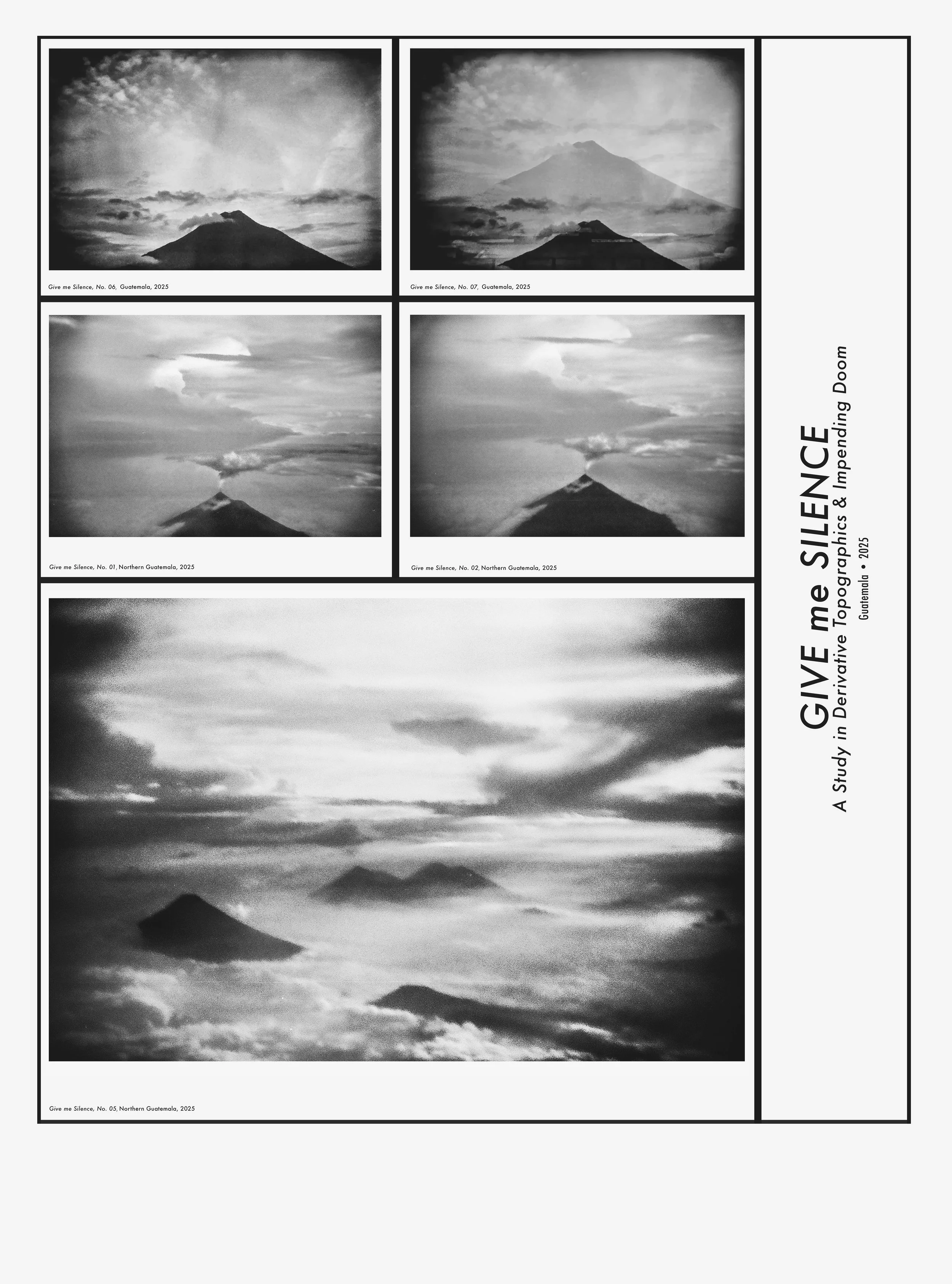
Give me Silence

Give me silence, water, hope.

Give me the struggle, the iron, the volcanoes.

Let bodies cling like magnets to my body.

Come quickly to my veins and to my mouth.

Speak through my speech, and through my blood.

-Pablo Neruda


Chiapas/Guatemala Border Region, 2025


Dame Silencio

Dame silencio, agua, esperanza.

Dame la lucha, el hierro, los volcanes.

Que los cuerpos se adhieran como imanes al mío.

Ven pronto a mis venas y a mi boca.

Habla a través de mis palabras y a través de mi sangre.

- Pablo Neruda


Chiapas/Guatemala Border Region, 2025


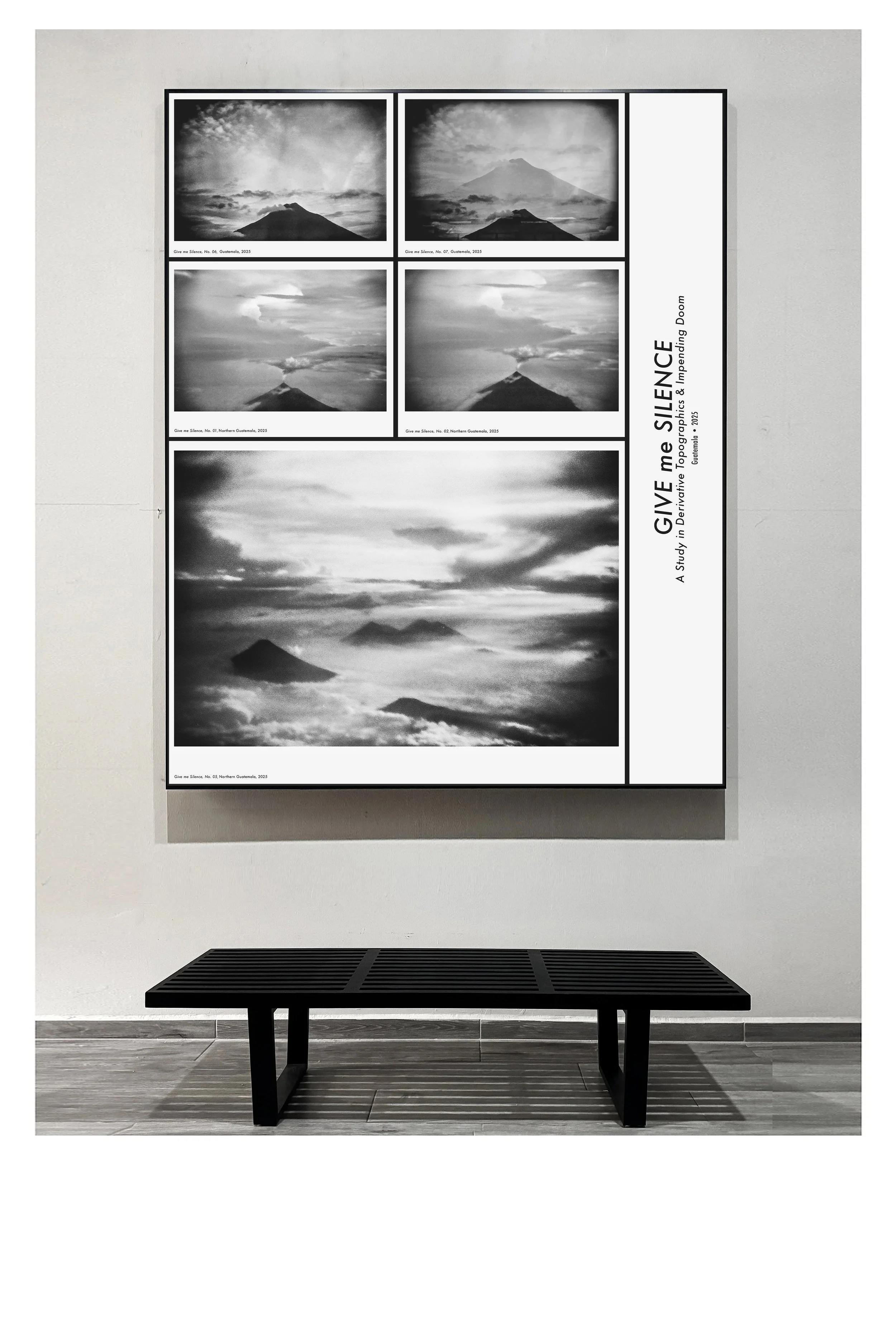
Volcanoes have profoundly shaped the lives of indigenous peoples, acting both as sources of catastrophic destruction and vital natural resources deeply rooted in cultural traditions and everyday survival. In regions like Central America, eruptions have repeatedly forced communities to flee, burying settlements and disrupting traditional food sources; however, over generations, the ash enriches the soil, creating incredibly fertile land vital for agriculture, which in turn fosters resilient communities. Consequently, volcanoes carry immense spiritual importance, often revered as powerful, living deities or ancestral spirits whose moods influence the cycles of life and death, blending unpredictable geological forces into origin myths, religious rituals, and a respectful, complex worldview that balances fear with deep reverence for the landscape they inhabit.


Chiapas/Guatemala Border Region, 2025

Chiapas/Guatemala Border Region, 2025


Los volcanes han marcado profundamente la vida de los pueblos indígenas, actuando como fuentes de destrucción catastrófica y como recursos naturales vitales profundamente arraigados en las tradiciones culturales y la supervivencia cotidiana. En regiones como Centroamérica, las erupciones han obligado repetidamente a las comunidades a huir, sepultando asentamientos y alterando las fuentes tradicionales de alimento; sin embargo, a lo largo de generaciones, la ceniza enriquece el suelo, creando tierras increíblemente fértiles, vitales para la agricultura, lo que a su vez fomenta la resiliencia de las comunidades. En consecuencia, los volcanes tienen una inmensa importancia espiritual, a menudo venerados como poderosas deidades vivientes o espíritus ancestrales cuyos estados de ánimo influyen en los ciclos de la vida y la muerte, fusionando fuerzas geológicas impredecibles con mitos de origen, rituales religiosos y una cosmovisión respetuosa y compleja que equilibra el miedo con una profunda reverencia por el paisaje que habitan.


VISURA
 

Antigua, Guatemala, 2025


Volcán Atitlán, Panajachel, Guatemala, 2019

φ


The Architecture of the In-Between

The in-between is a vast territory where the familiar dissolves into the horizon, in a shimmer of uncertainty. Aspace where overwhelming silence forces a confrontation with a self stripped of the roles and labels that typically define life. The mind finds itself in a fragile yet strangely powerful state of liminality, where the void is not a lack of meaning but a wide-open space where anything could happen.


La Arquitectura del Intermedio

El intermedio es un vasto territorio donde lo familiar se disuelve en el horizonte, en un destello de incertidumbre. Un espacio donde un silencio abrumador obliga a una confrontación con un yo despojado de los roles y las etiquetas que suelen definir la vida. La mente se encuentra en un frágil pero extrañamente poderoso estado de liminalidad, donde el vacío no es una falta de sentido, sino un espacio abierto en el que cualquier cosa podría suceder.


We often think of “nature” as a destination—but between our dense clusters of culture, that vast, raw distance does more than just separate us; it shapes the way we think, feel, and coexist. Society thrives on proximity. We create “culture clusters”—cities and towns where ideas and traditions ferment in close proximity. However, these clusters are shaped by the surrounding vastness. The raw terrain between our outposts acts as a psychological filter. When a community is separated by a mountain range, a desert, or a large river, its culture becomes unique, hardened, and shaped by the barrier it faces. The “empty space” isn't truly empty; it’s a pressurized zone that forces human expression to adapt to the land’s scale. The shapes of the earth—its natural geometry—interact with the human psyche in profound ways: an endless horizon pulls the mind outward, creating a sense of possibility while also evoking a haunting awareness of one's own smallness. On the horizon, the ego has nowhere to hide.


A menudo pensamos en la "naturaleza" como un destino, pero entre nuestros densos cúmulos culturales, esa vasta y cruda distancia hace más que simplemente separarnos; moldea la manera en que pensamos, sentimos y coexistimos. La sociedad prospera gracias a la proximidad. Creamos "cúmulos culturales": ciudades y pueblos donde las ideas y tradiciones fermentan en estrecha proximidad. Sin embargo, estos cúmulos están moldeados por la inmensidad circundante. El terreno agreste entre nuestros asentamientos actúa como un filtro psicológico. Cuando una comunidad está separada por una cordillera, un desierto o un gran río, su cultura se vuelve única, se endurece y se moldea por la barrera que enfrenta. El "espacio vacío" no está realmente vacío; es una zona presurizada que obliga a la expresión humana a adaptarse a la escala del terreno. Las formas de la tierra, su geometría natural, interactúan con la psique humana de maneras profundas: un horizonte infinito atrae la mente hacia afuera, creando una sensación de posibilidad a la vez que evoca una inquietante conciencia de la propia pequeñez. En el horizonte, el ego no tiene dónde esconderse.


Conversely, the verticality of canyon walls fosters a “closed” psychology. They turn the spirit inward, offering a sense of protection or, otherwise, a heavy weight of ancient, stoic permanence. The sky, as a measure of scale in the vastness, ceases to be merely a ceiling and becomes a central character. Its shifting colors and immense scale remind us that our cultural “clusters” are just temporary interruptions in a much larger, celestial order. Elements: The language of rock, water, and wood, which our spirits respond to instinctively—raw fundamentals that define these spaces. Rock represents the “slow time” of the universe. Sitting among ancient boulders allows us to feel the stillness of a timeline that disregards human urgency. Water, whether a rushing river or a quiet lake, introduces the idea of flow and change. It acts as the connective tissue weaving through empty spaces, reminding us that nothing is truly static. Living trees serve as a bridge between the earth and the sky, the only living witnesses to the interaction between soil and wind, reflecting our own growth as biological mirrors.


Por el contrario, la verticalidad de las paredes del cañón fomenta una psicología cerrada. Retraen el espíritu, ofreciendo una sensación de protección o, en su defecto, una pesada carga de permanencia ancestral y estoica. El cielo, como medida de escala en la inmensidad, deja de ser un simple techo y se convierte en un personaje central. Sus colores cambiantes y su inmensa escala nos recuerdan que nuestros "grupos" culturales son solo interrupciones temporales en un orden celestial mucho mayor. Elementos: El lenguaje de la roca, el agua y la madera, al que nuestros espíritus responden instintivamente: fundamentos puros que definen estos espacios. La roca representa el "tiempo lento" del universo. Sentarse entre antiguas rocas nos permite sentir la quietud de una línea de tiempo que ignora la urgencia humana. El agua, ya sea un río caudaloso o un lago tranquilo, introduce la idea de flujo y cambio. Actúa como el tejido conectivo que teje a través de los espacios vacíos, recordándonos que nada es verdaderamente estático. Los árboles vivos sirven como puente entre la tierra y el cielo, los únicos testigos vivos de la interacción entre el suelo y el viento, reflejando nuestro propio crecimiento como espejos biológicos.


We find the Spirit in the Gap. We are not just inhabitants of our cities; we are products of the spaces between. GOD = The geometry of distance. The jagged lines of peaks, the curves of rivers, and the flat indifference of the desert serve as a slight hand shaping the psychology of our souls. By recognizing the power of these empty spaces, we begin to understand that our “culture” is not just what we build, but how we respond to the magnificent, raw vastness that refuses to be contained.


Encontramos el Espíritu en la Brecha. No somos solo habitantes de nuestras ciudades; somos producto de los espacios intermedios. GOD = la Geometría de la Distancia. Las líneas irregulares de los picos, las curvas de los ríos y la indiferencia llana del desierto actúan como una mano ligera que moldea la psicología de nuestras almas. Al reconocer el poder de estos espacios vacíos, comenzamos a comprender que nuestra «cultura» no es solo lo que construimos, sino cómo respondemos a la magnífica y cruda inmensidad que se niega a ser contenida.


φ


Theatre of Cruelty

The legacy of Beatrice Cenci remains a haunting bridge between the institutional violence of Renaissance Rome and the ritualistic landscapes of Mexico, bound together by the fevered vision of Antonin Artaud. After the 1935 premiere of Les Cenci, Artaud sought a primal refuge in Mexico, aiming to transform the “Theatre of Cruelty” from stage-theory into a lived, visceral experience. This intersection revealed a soft power—the feminine defiance of a bewitching beauty that endured through trauma and mirrored the magnetic allure of power and danger. He found a people who, like himself, venerated the Virgin, and a space where the scent of frankincense and sandalwood mingled with the raw, red clay of pilgrimage, asserting that grace was not the absence of suffering but the artful mastery of it.


Teatro de la Crueldad

El legado de Béatrice Cenci sigue siendo un puente inquietante entre la violencia institucional de la Roma renacentista y los paisajes ritualistas de México, unidos por la visión febril de Antonin Artaud. Tras el estreno de Les Cenci en 1935, Artaud buscó un refugio primigenio en México, con el objetivo de transformar el "Teatro de la Crueldad" de la teoría escénica en una experiencia vivida y visceral. Esta intersección reveló un poder blando: el desafío femenino a una belleza cautivadora que perduró a través del trauma y reflejó el atractivo magnético del poder y el peligro. Encontró un pueblo que, como él, veneraba a la Virgen y un espacio donde el aroma del incienso y el sándalo se mezclaba con la arcilla cruda y roja de la peregrinación, afirmando que la gracia no era la ausencia de sufrimiento, sino su dominio artístico. 


In this fresh landscape, Artaud’s vision found its true stage not in a traditional theater, but in the very streets and spiritual practices he encountered. He saw the indigenous ritual—the Tarahumara peyote ceremony—as a genuine expression of his artistic vision—a performance in which the line between actor and audience blurred, and existence was stripped down to its most primal, hallucinatory essence. Mexico became the crucible where the symbolic violence of Rome fused with a living, visceral enactment—a land where history wasn’t just remembered but actively re-enacted through art, culture, politics, and everyday life. It was a lasting transformation of space, a constant spectacle of attraction and unsettling danger, a strange spectrum in which the very air itself was heavy with echoes of sacrificed innocence.


Oh! in this mortal world

There is no vindication and no law,

Which can adjudge and execute the doom

Of that through which I suffer.

—Beatrice Cenci


En este paisaje fresco, la visión de Artaud encontró su verdadero escenario no en un teatro tradicional, sino en las mismas calles y en las prácticas espirituales que conoció. Veía el ritual indígena —la ceremonia tarahumara del peyote— como una expresión genuina de su visión artística: una representación en la que la línea entre actor y público se difuminaba y la existencia se reducía a su esencia más primitiva y alucinatoria. México se convirtió en el crisol donde la violencia simbólica de Roma se fusionó con una representación viva y visceral: una tierra donde la historia no solo se recordaba, sino que se recreaba activamente a través del arte, la cultura, la política y la vida cotidiana. Fue una transformación duradera del espacio, un espectáculo constante de atracción y peligro inquietante, un espectro extraño en el que el aire mismo se impregnaba de ecos de inocencia sacrificada.

This historical connection resonates deeply in today's Mexico, where the Cenci archetype persists in a thousand forms across the country, woven into the fabric of daily life. The modern metropolis of Mexico City, a vibrant, sprawling entity built over ancient sacrifice, stages above all, a daily theatre of cruelty, blending baroque beauty with brutal reality. From the elegant, melancholic street portraits of the victims that evoke “punished innocence,” to the graffiti-covered walls and riot barriers of the Capitol that speak truth to power and perceived repression, a city that breathes life into Artaud’s vision. This duality is manifest in the contrast between the glittering luxury of high society and the raw resilience of street barrios—a magnetic landscape where the sweet aroma of maize mingles with the metallic tang of urban struggle. In Mexico, the subtle, persistent strength of feminine disobedience ensures that the legacy of Beatrice Cenci remains timeless; a lasting whisper challenging the ethos of a population to find grace amid the unsparing spectacle of survival.


¡Oh! en este mundo mortal

no hay reivindicación ni ley,

que pueda juzgar y ejecutar el destino

de aquello por lo que sufro.

—Beatrice Cenci


Esta conexión histórica resuena profundamente en el México de hoy, donde el arquetipo Cenci persiste en mil formas a lo largo del país, entretejido en la trama de la vida cotidiana. La metrópolis moderna de la Ciudad de México, una entidad vibrante y extensa construida sobre antiguos sacrificios, escenifica, sobre todo, un teatro cotidiano de crueldad, mezclando belleza barroca con brutal realidad. Desde los elegantes y melancólicos retratos callejeros de las víctimas que evocan la "inocencia castigada", hasta los muros cubiertos de grafitis y las barreras antidisturbios del Capitolio que dicen la verdad sobre el poder y la represión percibida, una ciudad que insufla vida a la visión de Artaud. Esta dualidad se manifiesta en el contraste entre el lujo brillante de la alta sociedad y la cruda resiliencia de los barrios callejeros, un paisaje magnético donde el dulce aroma del maíz se mezcla con el sabor metálico de la lucha urbana. En México, la fuerza sutil y persistente de la desobediencia femenina asegura que el legado de Beatrice Cenci permanezca atemporal: un susurro duradero que desafía el espíritu de una población a encontrar la gracia en medio del espectáculo despiadado de la supervivencia.


Oaxaca de Juarez, Oaxaca, 2025

Oaxaca de Juarez, Oaxaca, 2025


φ


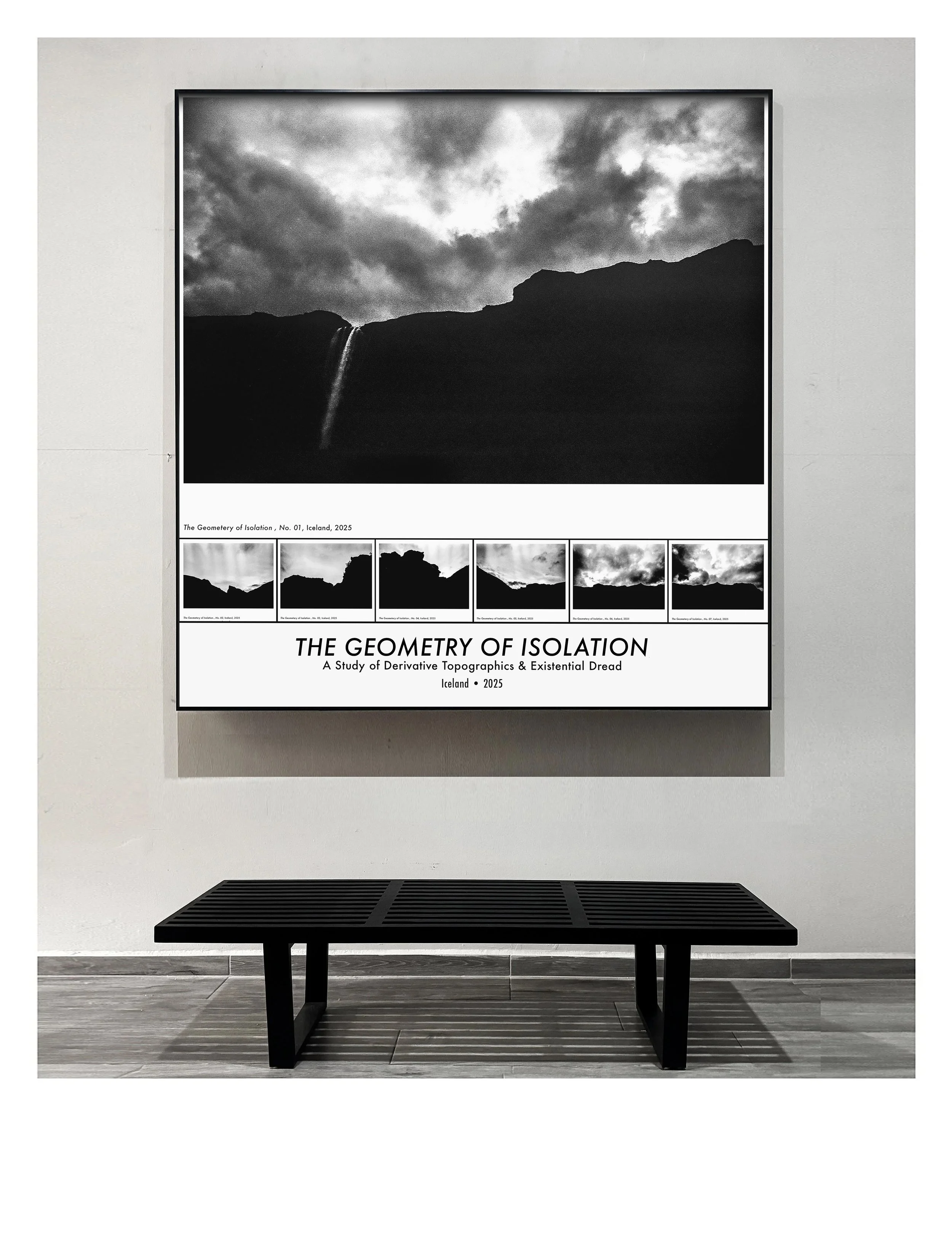
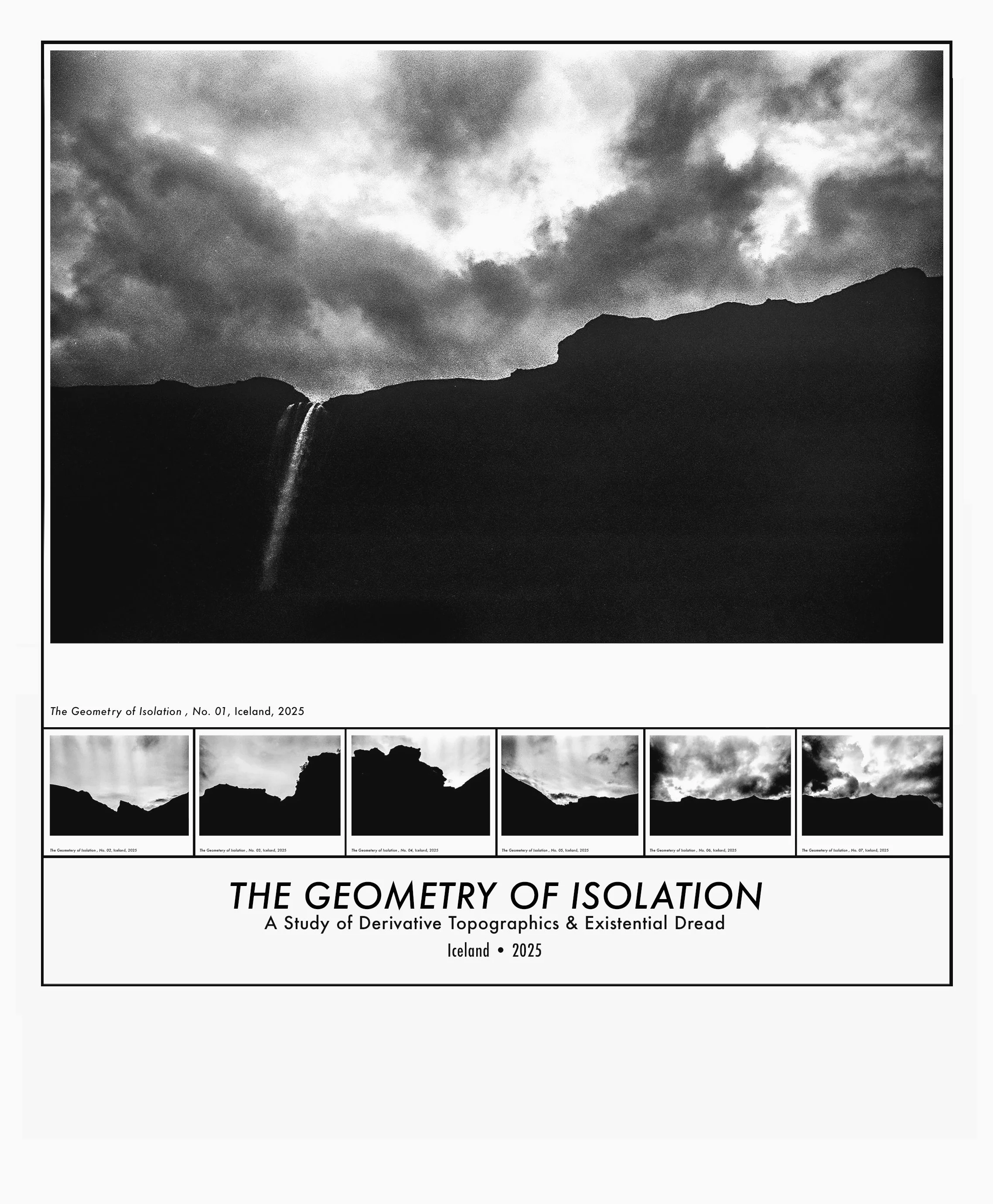
The Geometry of Isolation

This series explores Iceland’s unique geological landscape and the dynamic natural forces that shape human experience. In such an extreme environment, self-reflection is not fostered but delivered forcefully, driven by stimuli that ignite vivid inner encounters, reflecting the harshness of the outside world and its conflicting physical dualities. Iceland encourages one to examine the interplay between solitude, resilience, and nature's raw power.


La Geometría del Aislamiento

Esta serie explora el singular paisaje geológico de Islandia y las dinámicas fuerzas naturales que moldean la experiencia humana. En un entorno tan extremo, la autorreflexión no se fomenta, sino que se transmite con fuerza, impulsada por estímulos que despiertan vívidos encuentros internos, reflejando la crudeza del mundo exterior y sus conflictivas dualidades físicas. Islandia invita a examinar la interacción entre la soledad, la resiliencia y el poder puro de la naturaleza.


Iceland, an otherworldly stage where geological epochs are condensed into immediate, tangible forms spread across infinite planes. Iceland’s terrain is not static scenery but a living record of time. Vast glaciers act as ancient guardians of history, their geometric crevasses echoing millennia of movement and change. Within a “Geometry of Desolation,” my focus on the visual energy of the coast and volcanic expanses was overshadowed by utter emptiness and extreme emotional compactness. Solitude on black sand beaches and a retina torn by jagged basalt formations seem to represent, in the rawest form, an existential intersection of volcanic "fire" and glacial "ice." I traveled to Iceland with a vague desire to explore how those living on the societal fringe of the Arctic are shaped by this unforgiving climate, since the environment creates a unique sense of identity, characterized by a "super abundance" of cultural riches born out of necessity and isolation. Standing at the edge of the North Atlantic, I found myself in an environment that actively shaped my perception, not just a static backdrop. The icy wind cut through me, making each breath a visceral reminder that this landscape is not passive—it's alive with energy. As time invisibly sculpts the cold stone, the expansive surroundings shape every aspect of our encounter.


Islandia, un escenario sobrenatural donde las épocas geológicas se condensan en formas inmediatas y tangibles que se extienden por planos infinitos. El terreno islandés no es un paisaje estático, sino un registro viviente del tiempo. Vastos glaciares actúan como antiguos guardianes de la historia, sus grietas geométricas evocan milenios de movimiento y cambio. Dentro de una "Geometría de la Desolación", mi atención centrada en la energía visual de la costa y las extensiones volcánicas se vio eclipsada por el vacío absoluto y una extrema compactación emocional. La soledad en playas de arena negra y una retina desgarrada por escarpadas formaciones basálticas parecen representar, en su forma más cruda, una intersección existencial de "fuego" volcánico y "hielo" glacial. Viajé a Islandia con el vago deseo de explorar cómo quienes viven en la periferia social del Ártico se ven moldeados por este clima implacable, ya que el entorno crea un sentido de identidad único, caracterizado por una "superabundancia" de riqueza cultural nacida de la necesidad y el aislamiento. De pie en la orilla del Atlántico Norte, me encontré en un entorno que moldeó activamente mi percepción, no solo un telón de fondo estático. El viento gélido me atravesaba, convirtiendo cada respiración en un recordatorio visceral de que este paisaje no es pasivo: está lleno de energía. Mientras el tiempo esculpe invisiblemente la fría piedra, el vasto entorno moldea cada aspecto de nuestro encuentro.


Beneath the restless waves making their way to the lonely coast lies an ocean of immense pressure—a relentless struggle for survival that paradoxically borders on transcendence. The pain and effort required to exist here are so overwhelming that they become a kind of blissful self-awareness. This realization is both intimidating and captivating. I felt driven to turn away from this harsh reality, yearning to merge with the sea itself, despite the paralyzing fear of being completely consumed. Still, I sensed that beyond such hardship and utter solitude, a deep peace awaited me if I could only surrender to the land and the cold wind blowing through every molecule of my bones. Gathering the courage to face the terrain, I decided to turn back toward the land, trusting the solid ground beneath my feet to support me as I moved only as my thoughts’ peaks and valleys allowed. The intense fire of hardship is not endless; it is the fear of eternal struggle that endures until one finds the possibility of happiness. True solitude is an illusion. If the fires of adversity can purify the soul, then we become united and whole. From this vantage shaped by the land’s raw power, I looked out over the ancient mystery: Iceland, a place that reads like noir poetry. From this vantage point—at the top of the world, in a land forged by fire and ice—I looked back at the world, and suddenly all I’ve ever known became a stranger to me. 


Bajo las olas inquietas que se abren paso hacia la costa solitaria yace un océano de inmensa presión: una lucha incesante por la supervivencia que, paradójicamente, roza la trascendencia. El dolor y el esfuerzo que requiere existir aquí son tan abrumadores que se convierten en una especie de dichosa autoconciencia. Esta constatación es a la vez intimidante y cautivadora. Sentí el impulso de alejarme de esta dura realidad, anhelando fundirme con el mar mismo, a pesar del miedo paralizante de ser consumido por completo. Aun así, presentía que, más allá de tanta adversidad y absoluta soledad, me esperaba una profunda paz si tan solo lograba rendirme a la tierra y al viento frío que soplaba a través de cada molécula de mis huesos. Reuniendo el coraje para enfrentar el terreno, decidí regresar a tierra, confiando en que la tierra firme bajo mis pies me sostendría mientras me movía solo según lo permitían los altibajos de mis pensamientos. El intenso fuego de la adversidad no es infinito; es el miedo a la lucha eterna que perdura hasta que uno encuentra la posibilidad de la felicidad. La verdadera soledad es una ilusión. Si el fuego de la adversidad puede purificar el alma, entonces nos unimos y nos volvemos completos. Desde esta posición estratégica, moldeada por el poder puro de la tierra, contemplé el antiguo misterio: Islandia, un lugar que se lee como poesía negra. Desde esta posición estratégica —en la cima del mundo, en una tierra forjada por el fuego y el hielo— miré hacia atrás, y de repente todo lo que conocía se volvió un extraño para mí.


φ


Auguries

At most, with hope, I aim to capture the profound interconnectedness of the macro and micro, where a single grain of sand acts as a vessel for the infinite, and a common wildflower mirrors the architecture of heaven. My work is an invitation to look beyond the surface of the natural world, recognizing that every creature’s suffering or joy resonates throughout our shared reality. By documenting the fragile balance between the terrestrial and the divine, these images suggest that the eternal is not an abstract concept but something held in the palm of the hand and experienced in the fleeting moment. Ultimately, at least, this series is a study of "Auguries"—small, overlooked moments in nature that reveal the vast, often paradoxical truths of our own, human soul.


Augurios

Como máximo, con esperanza, busco capturar la profunda interconexión entre lo macro y lo micro, donde un solo grano de arena actúa como un recipiente para lo infinito, y una flor silvestre común refleja la arquitectura del cielo. Mi obra es una invitación a mirar más allá de la superficie del mundo natural, reconociendo que el sufrimiento o la alegría de cada criatura resuena en nuestra realidad compartida. Al documentar el frágil equilibrio entre lo terrenal y lo divino, estas imágenes sugieren que lo eterno no es un concepto abstracto, sino algo que se sostiene en la palma de la mano y se experimenta en el instante fugaz. En última instancia, al menos, esta serie es un estudio de los "Augurios": pequeños momentos olvidados en la naturaleza que revelan las vastas, a menudo paradójicas, verdades de nuestra propia alma humana.


The tree which moves some to tears of joy is in the eyes of others only a green thing which stands in the way. Some see nature all ridicule and deformity, and by these I shall not regulate my proportions; and some scarce see nature at all. But to the eyes of the man of imagination, nature is imagination itself. As a man is, so he sees.

– William Blake


El árbol que a algunos les hace llorar de alegría es, a los ojos de otros, solo una cosa verde que se interpone en el camino. Algunos ven la naturaleza como ridícula y deformada, y por esto no regularé mis proporciones; y otros apenas la ven. Pero a los ojos del hombre de imaginación, la naturaleza es la imaginación misma. Tal como es el hombre, así ve.

– William Blake


φ


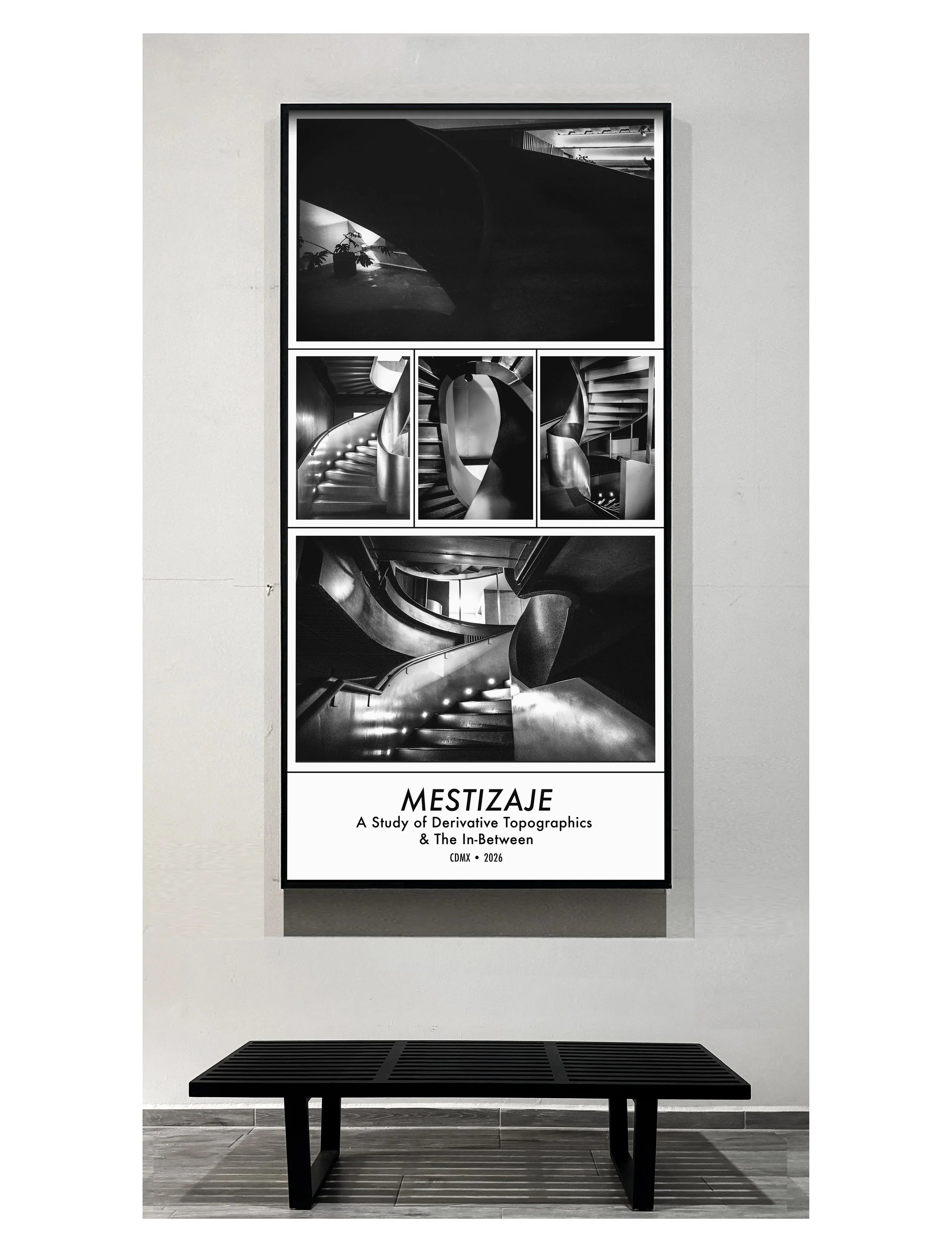
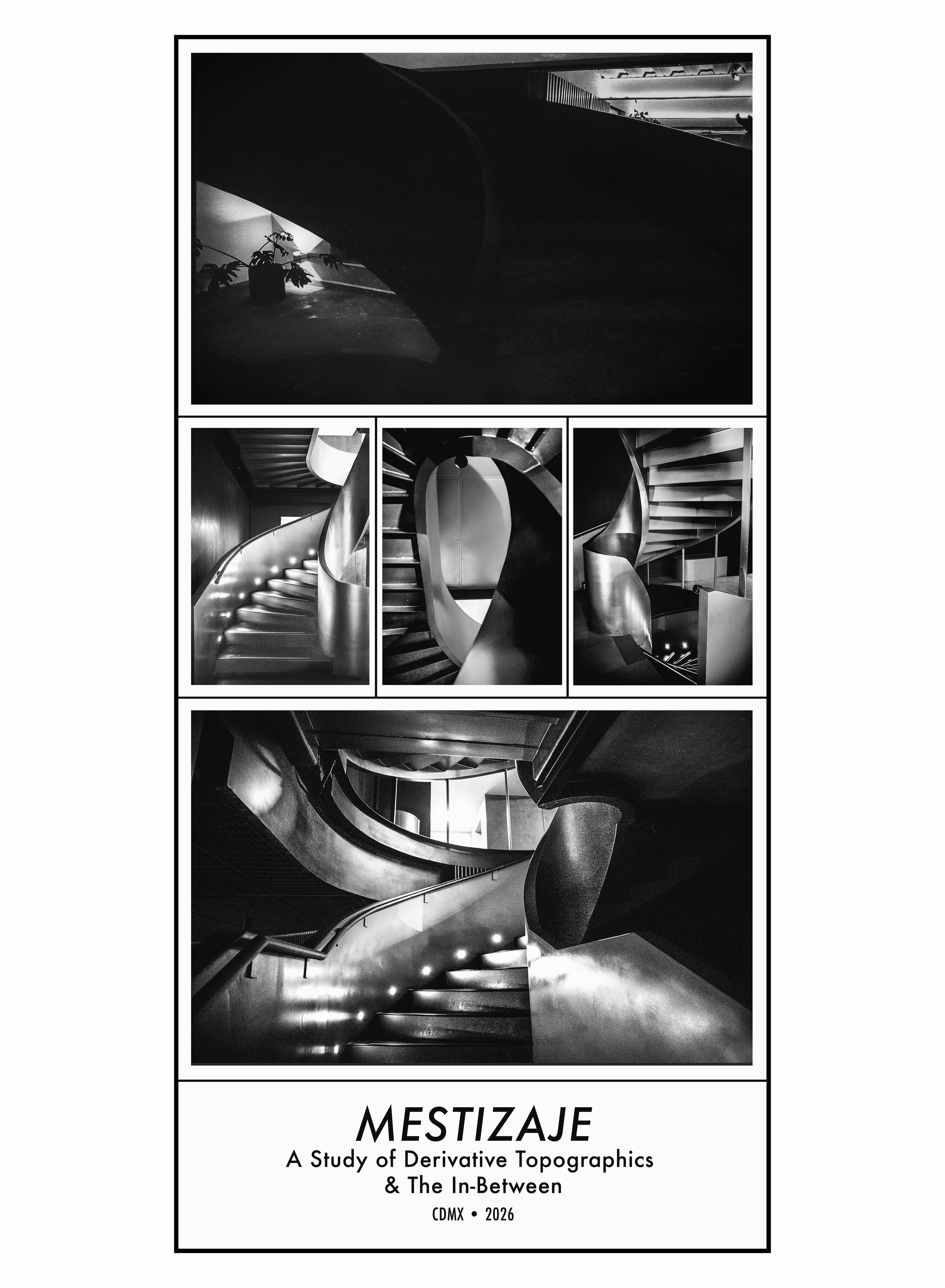
Mestizaje

A staircase is a vertical timeline where the act of climbing becomes a physical negotiation between the past and the future. To photograph a staircase in Mexico is to capture the tension of Mestizaje—that permanent state of transition where a heavy, geometric stone meets a sweeping, ornate curve, traveling through colonial times, mid-century modernist influence, to the present. Whether framing the steep, rhythmic ascent of a cathedral or the sun-drenched spirals of a Barragán home, there is a documenting of a culture that views elevation not just as a change in elevation, but as a spiritual and social journey. These structures serve as the "in-between" spaces where the rigid geometry of the earth meets the fluid aspirations of the sky, prompting a reflection on whether we are rising toward a new identity or descending back into the roots of the soul.


Mestizaje

Una escalera es una línea de tiempo vertical en la que el acto de subir se convierte en una negociación física entre el pasado y el futuro. Fotografiar una escalera en México es capturar la tensión del mestizaje: ese estado permanente de transición en el que una piedra pesada y geométrica se encuentra con una curva amplia y ornamentada, viajando a través de la época colonial y la influencia modernista de mediados de siglo hasta el presente. Ya sea enmarcando el empinado y rítmico ascenso de una catedral o las espirales bañadas por el sol de una casa de Barragán, se documenta una cultura que concibe la elevación no solo como un cambio de altitud, sino también como un viaje espiritual y social. Estas estructuras sirven como espacios intermedios donde la rígida geometría de la tierra se encuentra con las fluidas aspiraciones del cielo, lo que incita a reflexionar sobre si nos elevamos hacia una nueva identidad o descendemos a las raíces del alma.


"I climb the stairs of the mountain, my heart a heavy vessel,

filled with the wine of my grief, and the bread of my solitude.

The path is steep and narrow, and the stones are sharp and cold.

But I climb, I climb, towards the summit of my soul. 

The wind howls in my ears, and the mist blinds my eyes.

But I climb, I climb, towards the light of the stars.

And when I reach the top, I will pour out my heart,

and the wine of my grief, and the bread of my solitude.

And I will be free, as the wind and the stars,

and my heart will be light, as a feather in the sky."

-Gabriela Mistral


Subo las escaleras de la montaña, con el corazón como un pesado vaso,

lleno del vino de mi dolor y del pan de mi soledad.

El camino es empinado y estrecho, y las piedras son afiladas y frías.

Pero subo, subo, hacia la cima de mi alma.

El viento aúlla en mis oídos y la niebla ciega mis ojos.

Pero subo, subo, hacia la luz de las estrellas.

Y cuando llegue a la cima, derramaré mi corazón,

y el vino de mi dolor, y el pan de mi soledad.

Y seré libre, como el viento y las estrellas,

y mi corazón será ligero, como una pluma en el cielo.

-Gabriela Mistral


In this context, the shape of the staircase guides the flow of time itself: the spiral signifies the cyclical nature of history—a repeating loop where the past is never truly gone—while the jagged zigzag of urban stairwells reflects the vibrant, chaotic pulse of modern Latin American life. By capturing the play of light and shadow across these steps, we translate the abstract concept of space into a narrative of persistence. I haven't just photographed architecture; I've aimed to capture an“Aceso Latinamericano"—a visual metaphor for a region that constantly reinvents itself through movement, balancing the weight of ancient gravity against the lightness of a future still being built, still taking shape through the glare of the sun, with an undeniable sense of hesitation, relentless analysis—weighing cultural sacrifice with globalization and the never-ending demand of modernization—yet with unyielding determination to move forward with balance.


En este contexto, la forma de la escalera guía el propio fluir del tiempo: la espiral simboliza la naturaleza cíclica de la historia —un bucle repetitivo en el que el pasado nunca desaparece del todo—, mientras que el zigzag irregular de las escaleras urbanas refleja el pulso vibrante y caótico de la vida moderna latinoamericana. Al capturar el juego de luces y sombras a lo largo de estos escalones, traducimos el concepto abstracto del espacio en una narrativa de persistencia. No solo he fotografiado arquitectura; he buscado capturar un "Aceso Latinoamericano", una metáfora visual de una región que se reinventa constantemente a través del movimiento, equilibrando el peso de la antigua gravedad con la levedad de un futuro que aún se construye, que aún se perfila bajo el resplandor del sol, con una innegable sensación de vacilación, un análisis implacable—sopesando el sacrificio cultural con la globalización y la incesante demanda de modernización—pero con una determinación inquebrantable de avanzar con equilibrio.


φ